Credit Card Processing for Small Business: Visa Lowers Rates, but New Fees Are Coming
Canadian small businesses may have an opportunity to reduce some credit card processing costs following Visa’s latest interchange rate changes. Effective October 24, 2026, Visa expanded its Small Merchant Interchange Program, increasing the annual Visa sales threshold from C$300,000 to C$750,000 and reducing rates for several eligible consumer credit card transactions.
However, another change is on the horizon. Visa plans to introduce a new fee of US$0.018 per domestic transaction in Canada starting in April 2027. According to the Canadian Federation of Independent Business (CFIB), the fee will initially be charged to payment processors and may be passed on to merchants.
For businesses reviewing their payment processing solutions, understanding both developments is important.

What Has Changed in Visa’s Credit Card Processing for Small Business?
Previously, Visa’s Small Merchant Interchange Program covered eligible businesses processing less than C$300,000 in annual Visa sales. The new threshold of C$750,000 means more Canadian merchants may qualify for lower interchange rates.
For eligible in-store consumer credit transactions involving Classic, Gold and Platinum Visa cards, the small merchant interchange rate has decreased from 0.77% to 0.70%. Selected online transaction categories have also received rate reductions.
Consider a business processing C$500,000 annually in eligible in-store Visa transactions. If it previously paid a 1.25% interchange rate and now qualifies for the 0.70% rate, the potential annual reduction in interchange costs would be C$2,750.
This example assumes all transactions qualify and the processor passes the full savings through to the merchant.
Important: Interchange is only one component of the total cost of credit card processing. A lower interchange rate does not automatically mean the merchant’s overall processing rate will decrease by the same amount. Actual costs depend on card types, transaction methods, pricing agreements and other applicable fees.
Eligibility is based on annual Visa transaction volume, not total business revenue. Merchants should confirm their eligibility and review their statements to understand how the changes affect their accounts.
The New Per-Transaction Fee: Why It Matters
While lower interchange rates may benefit eligible merchants, Visa’s planned US$0.018 fee per domestic transaction could create an additional cost.
CFIB reports that Visa intends to introduce this fee in April 2027, following Mastercard’s introduction of a similar fee. Whether and how the cost appears on a merchant’s statement will depend on the payment processor and its pricing structure.
A fixed transaction fee can have a different impact depending on the average purchase amount.
For example:
C$3 coffee purchase: A 2.5-cent fee represents approximately 0.83% of the transaction value.
C$500 purchase: The same fee represents just 0.005% of the transaction value.
For coffee shops, cafés, quick-service restaurants and other businesses processing a high volume of small purchases, even a small per-transaction charge can add up over time.
Businesses processing larger transactions may experience a much smaller proportional impact. The actual annual cost will depend on transaction volume, the applicable fee and whether the processor passes it on.

How Can Businesses Manage Credit Card Processing Costs?
Interchange rates are only part of the picture. A complete assessment of business payment processing rates should consider the full range of costs associated with accepting payments, including:
Interchange and card network fees
Payment processor pricing and transaction charges
Interac debit transaction costs
POS system and payment terminal fees
Monthly service fees and other contractual charges
A merchant statement review can help business owners understand how these charges affect their overall cost of accepting payments and identify potential opportunities to improve their payment setup.
The right payment processing solution should reflect a business’s transaction volume, average purchase value, operating requirements and customer payment preferences.
How 8760 Helps Businesses Optimize Card Acceptance
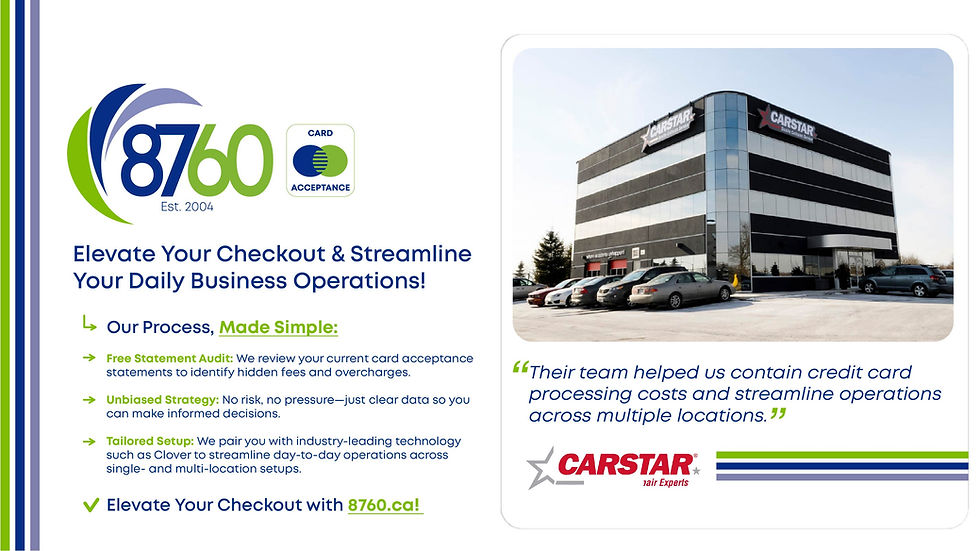
At 8760 Expense Management, we help businesses navigate payment processing complexity, review their existing costs and identify opportunities to improve efficiency.
Our process begins with a complimentary merchant statement review. We assess your current payment processing costs and, where opportunities exist, develop data-driven recommendations tailored to your business.
With more than 20 years of experience, 8760 helps businesses across Canada and the USA evaluate their card acceptance arrangements and make more informed decisions about their payment processing solutions.
Whether you operate a café, retail store, restaurant or another type of business, understanding your merchant processing costs is an important step toward managing operating expenses.
Take control of your card acceptance costs.
Visit 8760 Card Acceptance Services to learn more about our services or contact our team at merchant@8760.ca to request your complimentary statement review.
8760: Navigate. Elevate. Optimize.



Comments